Views
Cricket in 1899 - high scores but low interest - Part One
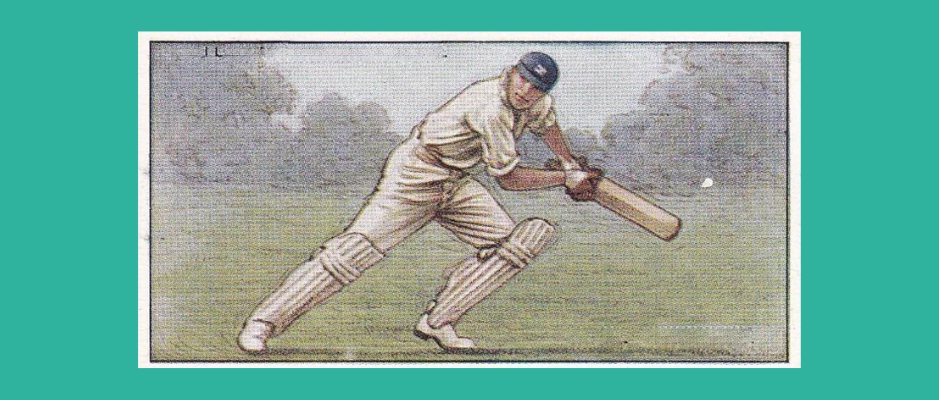
In Peter Bloor’s latest series timed as the Cricket Twenty Over World Cup takes place in India and Sri Lanka, he looks back to 1899 when the M.C.C tried to resolve the problem of high-scoring games which were proving to be far from entertaining to those that were watching.
“Long scores and the rules of cricket”
Reviewing the cricket season of 1899 both an editorial in The Times and an article by “An Old Blue” voiced the growing concern that an abnormally dry summer and the consequent hard pitches – which had become ever-better prepared and truer anyway – had resulted in huge scores and far too many drawn matches - 60 of the 150 played in the County Championship.
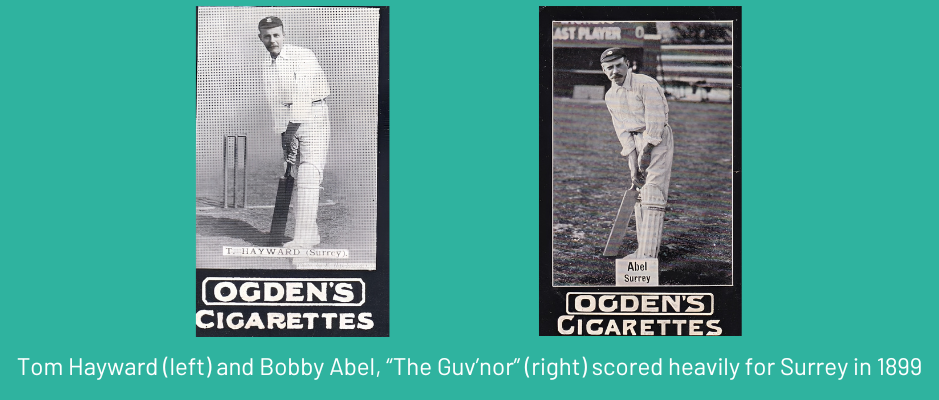
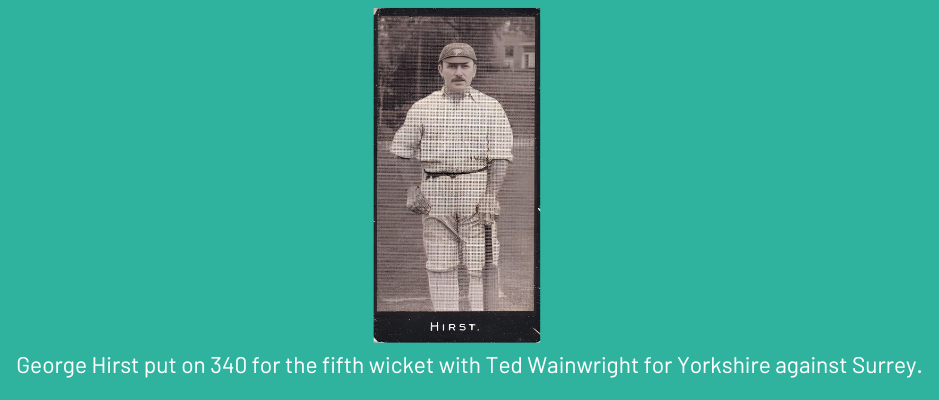
Scores were indeed huge, with all but one of the biggest in county cricket that year being made at the height of summer. In July and August Hampshire scored 672 for 7 declared against Somerset before conceding 657 in their next match, against Warwickshire. In their next innings Warwickshire again topped 600, making 605 all out against Leicestershire, who had already conceded 590 to Lancashire and were a week away from conceding another 673 to Essex. However, even these scores were exceeded when Yorkshire played Surrey at The Oval and scored 704 (Ted Wainwright 228, George Hirst 186), to which Surrey replied with 551 for 7 (Tom Hayward 273, Bobby Abel 193). Yorkshire may have scored over 700 but they had still fallen 107 runs short of the highest score of the season, the 811 Surrey had made against Somerset at the end of May, when Abel had carried his bat for 357.
“There were many signs of weariness on the part of spectators”
Somerset, a poor side that would win just 2 of their 16 games and finish second bottom of the County Championship, had lost their best bowler Teddy Tyler to injury but to their immense credit ‘never lost their equanimity during this long innings, never became indifferent in the field and the last ball was bowled with as much determination as the first.’
This was creditable indeed given their bowling figures - the magnificently-named Beaumont Cranfield had conceded 180 off 56 overs, George Gill 170 off 43.2 and Walter Hedley 105 off 48 - but spectators in general were not so accepting, with “An Old Blue” reporting incidents of ‘hooting, whistling of the Dead March in Saul and satirical applause of a hit for two.’ Concerned by the high-scoring tedium in the game he warned that “The feeling began to show strength that cricket would be better if there were fewer runs made, if the chances of a draw were less overwhelming, if the state of a match were more frequently critical, and if there were more outlets for enthusiasm or excitement other than the breaking of some huge record.”
‘The M.C.C. must take the matter into serious consideration’
Equally concerned at season’s end The Times urged that “the Committee of the M.C.C. must take the matter into serious consideration during the coming winter.” At its annual meeting in May 1900 the M.C.C. would do more than consider – it would act, devising a radical solution and implementing it on the same day in the M.C.C. versus Nottinghamshire match at Lord’s.
References
Credits: The quotes and other information in this article are taken from Cricket A Weekly Record, The Times, the Morning Leader and the Daily Chronicle 1899 and 1900.
Images: Bobby Abel and Tom Hayward, both Ogdens 1901, George Hirst F&J Smith 1912. Banner image Wills 1929
Comments: 0 (Add)
 RSS
RSSIn this section
Volunteers
We’re always on the lookout for volunteers to help run our clubs all across England, Scotland and Wales – find out more here.
Find a club
Want to know where your nearest Sporting Memories club is? View our Club Finder page here.