Views
Sportsmen of the Somme - The Leeds City footballer and soldier
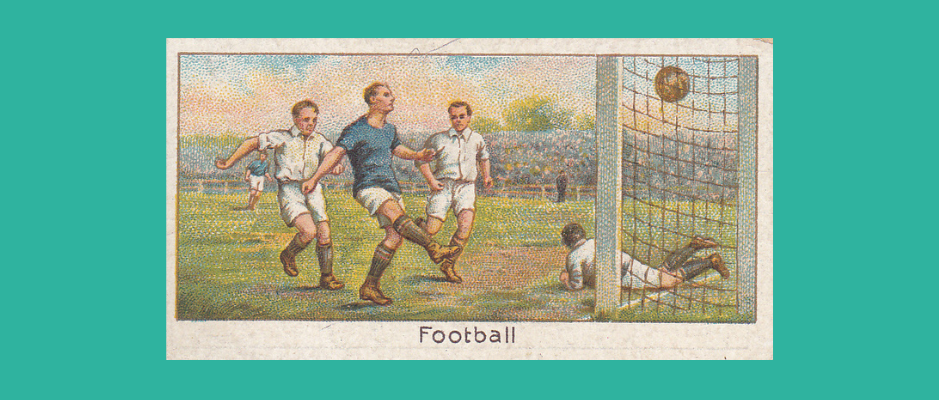
In the latest feature of our Sportsmen of the Somme series, Peter Bloor looks into Evelyn Lintott’s connection to Leeds, having played for Leeds City Football Club before joining the City Battalion during the First World War.
Herbert Chapman promises a ‘winning team, secured at all costs’
When a young Herbert Chapman took over as the manager of Leeds City in June 1912 the club’s position was dire, depending as it did on chairman Norris Hepworth for its financial survival and on being re-elected for its survival as a Football League club. It was comfortably re-elected and both chairman and manager then began the task of reviving the club, Mr. Hepworth by discharging all liabilities and guarantees when he and the Receiver liquidated and then immediately re-formed it and Chapman by signing a number of players to improve a side that had finished second bottom of the Second Division in 1911-12.
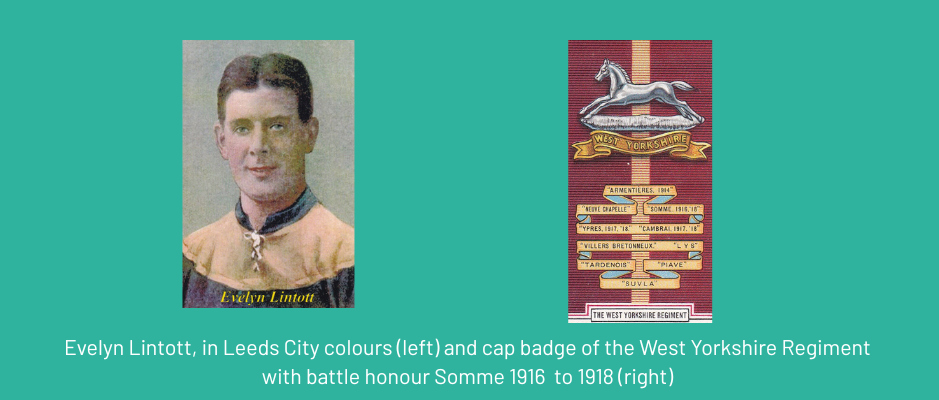
Three of those players were George Law from Glasgow Rangers, William Scott from Everton and Evelyn Lintott from Bradford City. All three were internationals, Evelyn having won seven England caps in 1908 and 1909, but his career had stalled following a knee injury and a delayed operation in 1910 after which he found it difficult to regain his place in the Bradford side, missing their 1911 Cup Final win and playing only two League matches in the 1911-12 season.
“Leeds City fined for paying back wages”
As if Mr. Hepworth and Herbert Chapman were not already dealing with enough while re-financing the club and rebuilding the team, in October 1912 the Football League fined City for paying Lintott, Scott and Law wages to which they were not entitled. Chapman initially believed that it was permissible to pay them from May 1st despite them not having signed until some two months later but then realised his mistake and reported the matter. A precedent having only recently been set by a hearing into the signing of Christopher Buckley by Aston Villa the League duly imposed a fine of £125, the sum of the wages the three had refunded the club, and censured Chapman, Lintott and Scott but not Law, who had arrived from Scotland and was judged to have been unfamiliar with League rules.
Lintott ‘the very best type of professional, his influence will be all for good’
This does seem to have been out of character for Evelyn, an intelligent man who worked as a schoolmaster while playing football and a former chairman of the Players’ Union who was in great demand as a fluent and commanding speaker at church services.
His performances on the field were entirely in character though - in the character of the pre-injury Evelyn. Captaining the side from his preferred position at centre-half he immediately showed that he was commanding not only in church but also on the pitch, where he rallied his side during a deflating 4-0 defeat at Fulham on the first day of the season and inspired his team-mates with his clean tackling, astute positional play and leadership in the next match, a 2-0 home win against Barnsley. He was also the leader of a fine defence - and the best player on the field - in a 2-1 win at Nottingham Forest, a tireless worker in the 4-1 home win against Burnley and the best of the backs in attack and defence in a mystifying 2-1 defeat at Glossop, one of three defeats to the teams that were to make up the bottom three during a season in which Leeds perversely also beat the top four and finished sixth.
‘E.H. Lintott will again be centre-half and act as captain’
It seemed that Herbert Chapman had revived the club and Evelyn, who did not miss a match in that season. Chapman had however spotted something and in August 1913 he signed two centre-halves, Jack Hampson from Northampton Town and Harry Peart from Bradford City. Evelyn nevertheless did play in the first two matches of the 1913-14 season, a 3-0 win against Glossop and a 2-1 defeat to Stockport County, but at right half, which was clearly not his best position, rather than at centre half where Hampson was preferred. He missed the next match against Bradford Park Avenue, supposedly with an injured ankle, and then all but four of the thirty-seven League and Cup matches that remained in the season, George Law becoming the preferred choice at right-half.
‘Lintott is by no means the player he was last season’…
In November he came into the team against Huddersfield Town at right-half after an injury to Charlie Copeland - and then went straight out again the following week when Copeland recovered. He dominated the middle of the field in the 2-0 win at Birmingham City in December but did not play again until January, first in a 5-1 victory over Stockport County that George Law missed with an attack of lumbago and then in a 2-0 Cup defeat to West Bromwich Albion that proved to be his last match for City.
His performance against West Brom recalled those of 1912-13 but it had nevertheless become obvious that Evelyn was no longer the same player - during the Stockport game for example he had clearly been struggling to catch a County forward when Hampson, recognising the danger, had set off from yards behind and not only passed them both but also won the ball. Was this loss of pace what Herbert Chapman had spotted months earlier?
“Evelyn Lintott…as fine a soldier as he was a sportsman”
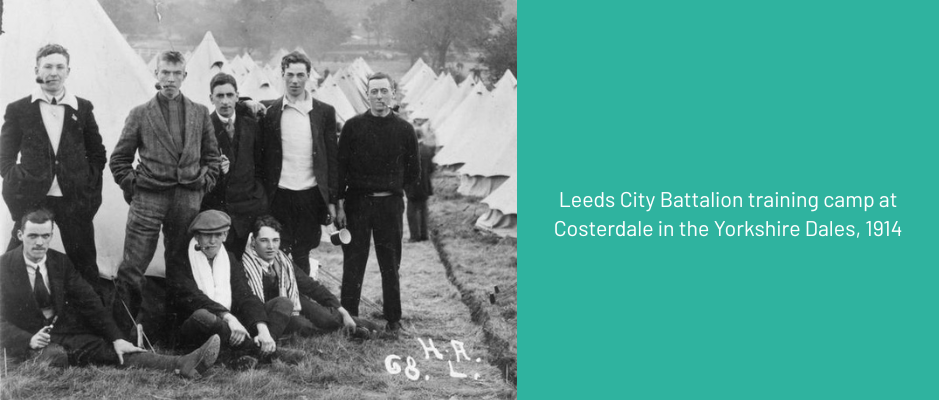
He was nonetheless retained for the 1914-15 season but granted his release in September 1914 when he requested it, as he was by his other employer, the Bradford Education Committee. Free to enlist as he had wished, Evelyn then joined the Leeds City Battalion of the West Yorkshire Regiment in which he served with the Yorkshire cricketers Major Booth, Roy Kilner and Arthur Dolphin. Like them he was on the Somme on July 1st 1916 and like Booth he was amongst those killed, a letter home from a fellow officer testifying that Evelyn had been as impressive a soldier as he had a man and a footballer - “Lintott” he wrote, “has been magnificent all the time he has been out here.”
References
The information and quotes in this article are taken from the Leeds Mercury, the Yorkshire Post and Leeds Intelligencer, the Yorkshire Evening Post, the Bradford Daily Telegraph, other local Yorkshire newspapers, the Athletic News and the Cricket and Football Field 1908-1916. Leeds City fixtures and results from the 11v11 site.
Images: Banner image Boguslavsky 1925: Evelyn Lintott Famous pre-Great War footballers J.F. Sporting Collectibles: Leeds Pals (Leeds City Battalion) camp Imperial War Museum reference IWM (Q 111826): West Yorkshire Regiment cap badge Gallaher 1939
Comments: 0 (Add)
 RSS
RSSVolunteers
We’re always on the lookout for volunteers to help run our clubs all across England, Scotland and Wales – find out more here.
Find a club
Want to know where your nearest Sporting Memories club is? View our Club Finder page here.