Views
Sportsmen of the Somme - Yorkshire and the Leeds Pals
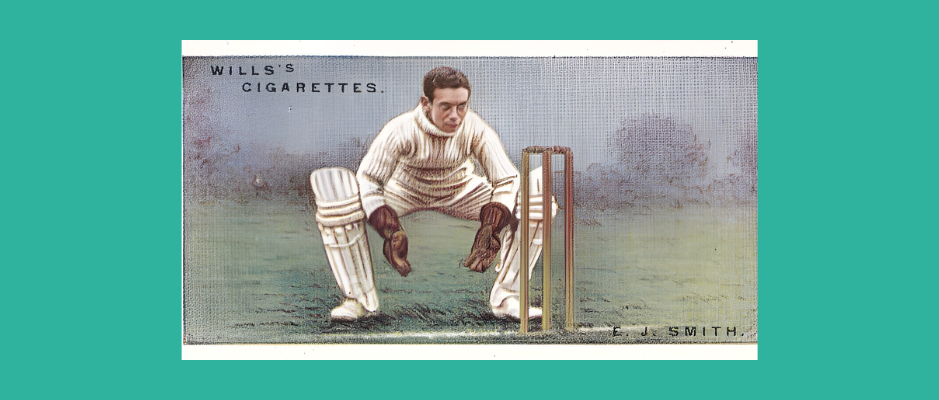
In the third part of our series focusing on sportsmen involved with the Battle of the Somme, Peter Bloor looks back on the connection to the First World War of Yorkshire CCC, specfically Yorkshire players Major Booth, Roy Kilner and Arthur Dolphin, who would go on to face different fates after joining the Leeds Pals Battalion.
-----
From the cricket field to the battlefield
When war was declared on August 4th 1914 Yorkshire were affected immediately and, like all the counties, continued to be so until it was decided that cricket could not, indeed should not, continue. On the night of the 4th their captain, Sir Archibald White, was called back to his Territorial regiment with Yorkshire needing 51 to beat Lancashire, which they did by 10 wickets after just 45 minutes of play on the 5th.
On the 15th it was Yorkshire who lost heavily, by an innings to Surrey at Lord’s, the Oval having been taken over temporarily by the military. This was another sign of the switch from cricket to war, one Yorkshire completed with their final match of the season against Sussex which was abandoned as a draw at tea on September 2nd after the ground had been invaded by a recruitment parade of Territorial Army Cyclists and pipers.
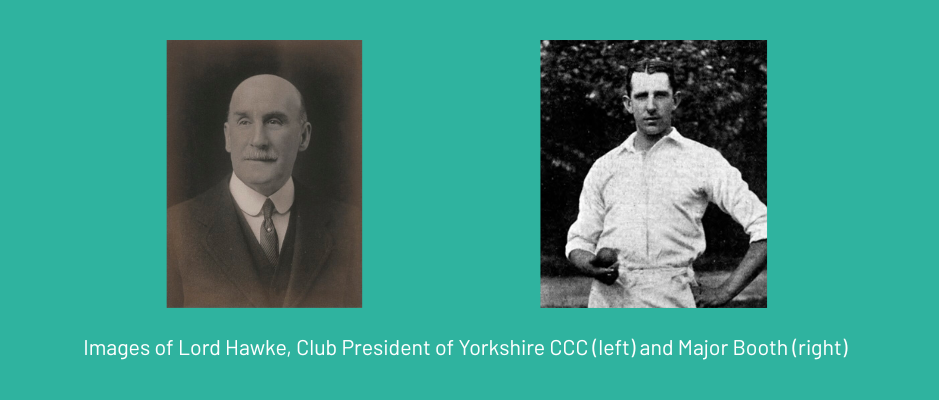
Major Booth - “at his best an absolute essential for Yorkshire success”
Earlier in the day Yorkshire’s fast bowler, arguably bowling all-rounder, Major Booth - Major was his name, not a military rank - had received a telegram from the Yorkshire club president Lord Hawke congratulating he and batsman Roy Kilner on their decision to enlist.
Following his 158 wickets and 1020 runs in the 1913 season (which included 107 not out against Middlesex), Booth had been selected for that winter’s tour of South Africa by M.C.C., the name under which England played overseas. He was a partial success, playing in two Tests making 32 and taking 4 for 49 in the fifth but also, during the first at Durban, being in a car with Jack Hobbs and Herbert Strudwick when it crashed, after which “Tiger” Smith of Warwickshire ran and fielded for him.
Any fears that Major’s performances in 1914 might be affected were however proved groundless by his 141 wickets that season, which included 14 for 160 against Essex, 12 for 89 against Gloucestershire and 10 for 79 against Kent, to which he added 731 runs, with scores of 54 and 37 not out at home to Warwickshire, 60 in the return match, and 47 against Leicestershire.
“Roy Kilner…will probably be found stronger than before”
Left-handed batsman Roy Kilner, who had made 1307 runs in 1913 and his first century, had spent his winter playing football for Darfield United - during which he contracted a serious bout of blood poisoning - and working as a fitter at Mitchell Main Colliery, where he fell ill before being taken to Sheffield Royal Infirmary to have his appendix removed.
Like Booth he showed no ill-effects early in the following season, making 77 in the first match against Northamptonshire and then 48 and 93 against Surrey and Lancashire respectively before his winter illnesses caught up with him. Ordered to rest and miss two matches he took a fortnight to get back into match practice but then returned to top form with 50 against Kent, 79 against both Northamptonshire and Gloucestershire, then 55 against Sussex at Bradford before finishing his season with 169 against Gloucestershire, 88 and 53 against Sussex at Brighton and 1,232 runs in total.
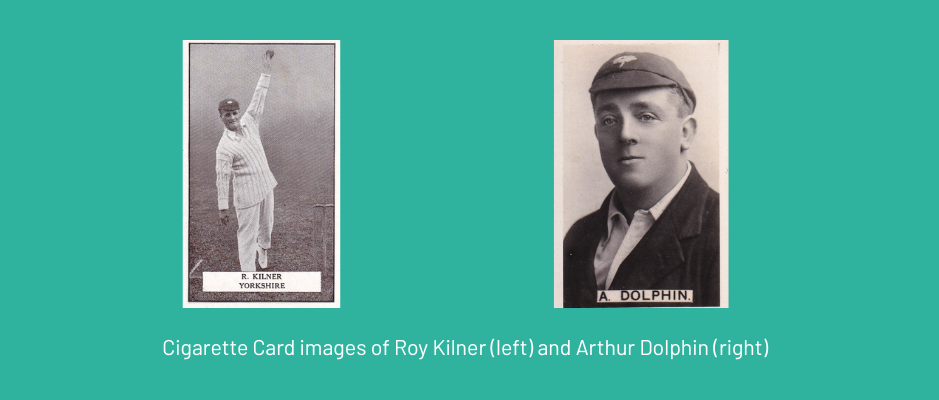
Arthur Dolphin - “No county could be better served behind the wicket”
In February 1915 Booth and Kilner were joined in the army by Arthur Dolphin, a very fine wicket-keeper much admired for his ‘keeping to Yorkshire’s difficult bowling, whether it was to the pronounced swing of Major Booth, George Hirst and Alonzo Drake, or the slow flighted trickery of Wilfred Rhodes. However, and unfortunately for Arthur, this admiration was not shared by the England selectors who preferred Surrey’s Herbert Strudwick, deterred as they were by the limitations of Arthur’s batting - or so it was suspected by some in Yorkshire.
Nevertheless, when Strudwick absented himself from the Lord’s centenary match in June Arthur was selected for the Rest of England XI to play the M.C.C. in South Africa side that included Rhodes and Booth, with Rhodes’ fellow Yorkshire and Golden Age titan George Hirst joining Arthur for the Rest.
Of the four, Arthur had the best match, keeping superbly to unfamiliar bowlers and in particular to Surrey’s Bill Hitch, who bowled with such speed and obtained such steep lift from an unpredictable pitch that he took 12 for 93, dismissed Jack Hobbs twice, was simply too fast for Frank Woolley and hit Rhodes nastily in the ribs and M.C.C. captain Johnny Douglas badly on his arm.
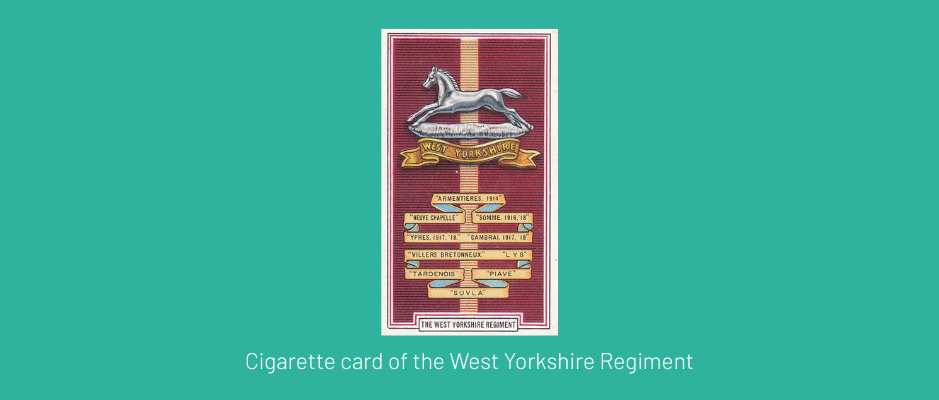
Yorkshire team-mates and Leeds Pals
When Major Booth, Roy Kilner and Arthur Dolphin joined up they were not cricketing nobodies, not least because they played for Yorkshire, champions for the ninth time in 1912 with all three in the side, second in 1913 and fourth in 1914 having won eleven of their last thirteen matches, six by an innings.
The further development of this powerful side was then halted by the Great War in which they served with a Yorkshire regiment, in the 15th West Yorkshires, the Leeds Pals, and on the Somme on July 1st 1916. On that day the battalion suffered horrifying casualties including Lieutenant M.W. Booth, who was killed, and Corporal Roy Kilner, wounded in the wrist.
Arthur Dolphin survived and wrote to his wife, telling her that he was “doing his bit and all right”, adding wryly that “I thought it was just a bit different from playing for England at Lord’s.” Roy Kilner also wrote, from hospital to the Yorkshire secretary Mr. F.C. Toone, promising him that “When I see you I shall be able to give you a better idea of what happened on that awful Saturday morning when poor old Major went west” and regretting deeply that “We can never replace him - Yorkshire will not be Yorkshire for a long time without Major Booth.”
Credits: The information in this article is taken from the Yorkshire Post and Leeds Intelligencer, the Sheffield Daily Telegraph, the Yorkshire Evening Post and other local newspapers, from The Times and other national newspapers, and from the Cricinfo record of the 1914 season.
References
Banner Image E.J. “Tiger” Smith Wills 1928
Martin Bladen Hawke, 7th Baron Hawke by Walter Stoneman, bromide print, 1920 National Portrait Gallery reference NPG x168206, © National Portrait Gallery, London
Roy Kilner Wills 1926
Arthur Dolphin Chums 1923
West Yorkshire Regiment cap badge Gallaher 1939
Comments: 0 (Add)
 RSS
RSSVolunteers
We’re always on the lookout for volunteers to help run our clubs all across England, Scotland and Wales – find out more here.
Find a club
Want to know where your nearest Sporting Memories club is? View our Club Finder page here.