Views
Sportsmen of the Somme – From East London to the Western Front
2026 marks the 110th anniversary since the Battle of The Somme, one of the most deadliest battles in human history during the First World War. In this series, we will be reflecting on some of the sportsmen of the time who were involved with the battle for the Allied forces. In the first part of our series, Communications Manager Tom Taylor reflects on how several Clapton Orient footballers lost their lives making the greatest sacrifice.
-----
From East London to the Western Front
As a Leyton Orient fan, one of the most important parts of the Club’s history is that of its involvement in the First World War, when several of the Club’s players (based in Clapton at the time) joined the front-live to serve for king and country but were sadly never to return.
The names of William Jonas, George Scott and Richard McFadden are etched eternally into the history of the football club and are recognised every year during the Remembrance Period for giving the ultimate sacrifice to their country at the Battle of the Somme in 1916.
Football and the War
When Britain first entered the Great War in the summer of 1914, the sport of football continued across the country, despite the ever-increasing need for men and resources to engage in fighting over on mainland Europe.
Indeed the public discourse had turned on football being played in such troubled times, with many supporters and attendees criticising whether sport should be still going on, despite it being seen by the authorities as a morale-boosting activity for the public. The full season of football in 1914-15 would be completed before all footballing activities would be ceased.
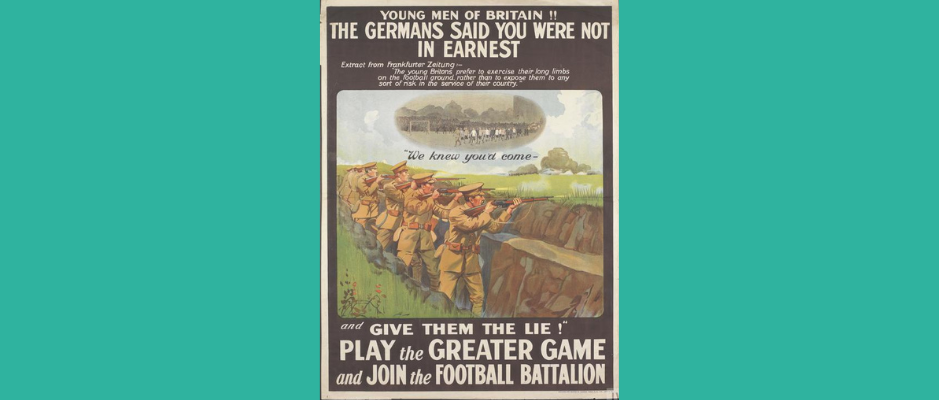
In December 1914, The FA and War Office began their efforts to bring the sport into the war by organising a recruitment meeting at Fulham Town Hall, where players, club officials and supporters of football clubs would be encourage to enlist into the 17th Battalion Middlesex Regiment (1st Football) – which would be widely known as the Footballers’ Battalion.
Orient and The Footballers’ Battalion
There was great interest from football clubs to support the war effort, but none more so than Clapton Orient, who were the first club to enlist in huge numbers, with over 40 players, staff and supporters eventually signing up to serve their country. Indeed, club captain Henry Wells-Holland is noted that he encouraged his staff to join the initial ten O’s players who joined the Battalion at the meeting at Fulham Town Hall.
Even though they agreed to sign up to the Battalion in late 1914, the players and staff at Orient did complete their footballing season before joining the war efforts. They were given a fond farewell in their final match against Leicester Fosse (now City) in April 1915, with a home crowd of over 20,000 cheering them on to a 2-0 win.
The match featured William Jonas, George Scott and Richard McFadden in the Orient side, who were ultimately saying their final farewell to Clapton Orient as they headed across Europe to join the warfront.
The Footballers’ Battalion were to be involved in one of the heaviest battles of the First World War – the Battle of the Somme – which started on the morning of the 1st July 1916 and would result in major casualties for allied forces and for the Battalion, with Jonas, Scott and McFadden making the ultimate sacrifice.
The Greatest Sacrifice
Private William Jonas, aged 25, who was a centre-forward and known for a being a popular figure amongst the female fanbase of the club, became trapped in a trench with McFadden while fighting at Delville Wood at the battle. Under heavy fire, he said goodbye to McFadden, jumped out of the trench and was killed instantly.
Private George Scott, who was a defender known for his presence, was wounded at the battle and ended up being taken as a prisoner of war. He was then taken to a German military hospital in Le Cateau for treatment, but died of his injuries in August 1916.
Company Sergeant Major McFadden was an Orient star, having been the club’s top scorer for four consecutive seasons up to joining the Battalion. Scot McFadden was a hero on and off the pitch.
It is reported that McFadden had saved a man from a fire, and again without hesitation attempted to save an infant girl who was trapped inside a burning building – sadly this was in vein as the young girl died of her injuries. McFadden also remarkably saved two young boys from drowning by jumping in to rescue them.
His bravery continued on the battlefield where he would go into no-man’s-land to rescue wounded comrades. He was awarded a military medal for his bravery during his time in the Battalion.
McFadden was fatally wounded by a shell blast whilst leading his men near Serre-lès-Puisieux in October 1916.
We Shall Remember Them
The names of Jonas, Scott and McFadden, along with all of those who signed up to the Battalion with Clapton Orient connections, will live on forever more through the club’s legacy and history.
With this summer marking 110 years since the Battle of the Somme, the Leyton Orient Supporters Club has once again organised a special trip for Orient fans to make the journey to Belgium to commemorate the service and sacrifice that was made by those from Clapton Orient during the First World War.
It is a timely reminder, particularly in today’s world, of the true price of war and battles to protect all that is free and just.
Up The Os
References
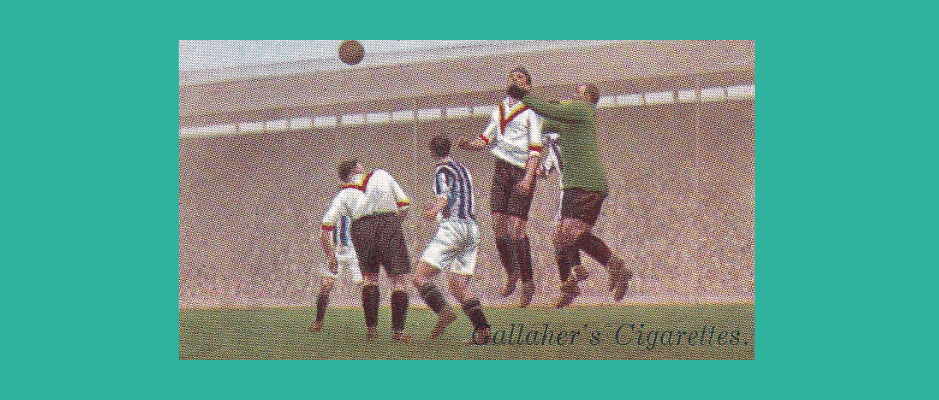
Banner image, West Bromwich Albion v. Clapton Orient, (Gallaher 1928)
Recruitment poster for the Footballer’s Battalion, Imperial War Museum © Art. IWM PST 12126
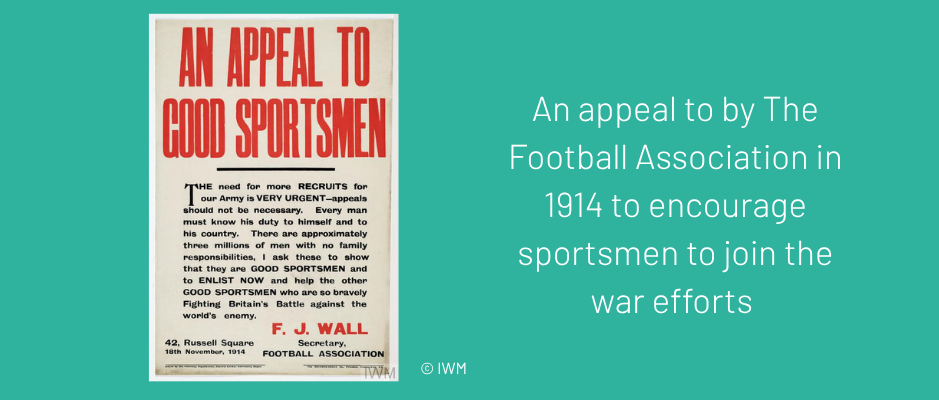
F.J. Wall’s appeal, Imperial War Museum, © Art. IWM PST 1057
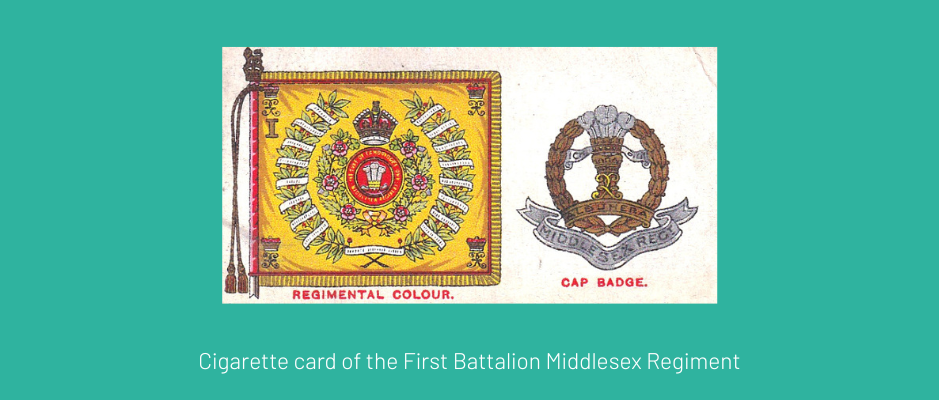
Regimental colour and cap badge of the Middlesex Regiment (Players, 1930)
Comments: 0 (Add)
 RSS
RSSVolunteers
We’re always on the lookout for volunteers to help run our clubs all across England, Scotland and Wales – find out more here.
Find a club
Want to know where your nearest Sporting Memories club is? View our Club Finder page here.