Views
World Cup Memories – Peter remembers when England were Pole-axed
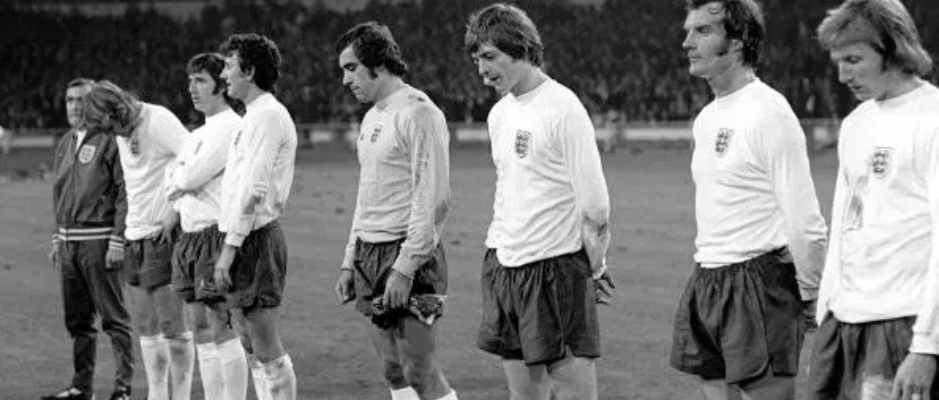
Following on from Jim Purvis’s feature about Scotland qualifying for the 1974 World Cup in England’s absence, volunteer Peter Bloor looks back to the disastrous night in October 1973, when the Three Lions failed to make the finals in West Germany.
“Gentlemen, you may include me out”
Writing in October 1973, two days after England had drawn 1-1 with Poland at Wembley - the result that put the Poles through to the World Cup Finals and England out - David Lacey reported in The Guardian that at the final whistle: “Men whose business is words were momentarily at a loss for them: a stunned silence fell over the press box as it became clear that England were not going to West Germany…for everybody, players and spectators alike, the failure to qualify was a numbing experience.”
I felt pretty much on my own in this, but not quite everybody felt the same - for I was neither stunned nor numbed and fifty-three years later still have the same question that I had at the time - why did anyone think that England deserved to go through?
A freakish night...
The story of that 1-1 draw is well known; Tomaszewski in goal somehow getting something in the way of almost everything he needed to, and when he didn’t there always being a defender to block the shot.
Norman Hunter trying to do who knows what out on the touchline and losing the ball to Lato who played in Domarski to score with a shot that went under Peter Shilton. Alf Ramsey not substituting the wholly ineffective Martin Chivers for Kevin Hector until the 88th minute, which still left him enough time to have a header blocked on the line.
It was a freak and by any measure on the balance of play, the number of chances, the amount of time (or times) the ball was in the Polish penalty area and so on, England should have won; but taking Group Five as a whole by what measure should England have qualified from it?
But was qualification deserved?
In a three-team group - the other team was Wales - they won only one of their four matches; drew both at home and did not beat the team that did qualify, indeed they would have in all likelihood have lost both games to them had Roy McFarland not wrestled Lato back by the shoulders in the 81st minute as the man who would finish top scorer in the 1974 Finals was outsprinting him and running clear.
In an interview years later, Mick Channon - who had a goal bafflingly disallowed - called the Poles “a solid team, well organised [with] a few decent players” but “moderate...I always felt we were far superior.”
He was an international footballer and out there at the time, while I was (and still am) just some random Herbert, but even on the night I thought that they had what England were missing - wingers in Grzegorz Lato and Robert Gadocha, (thank you Mr. and Mrs. Gadocha for giving your son a name I can spell) - and in Kazimierz Deyna, a midfielder to calm and run their match while everything around him was a frantic mix of tackles, blocks, clearances and the windmilling Tomaszewski.
1966 methods not working seven years on
Still locked into 1966, Ramsey did not have or want wingers but Poland had their two, both of whom were fast and stretched England across the width of the pitch. I have one of those snapshot memories of the moments just after Lato had dispossessed Hunter, not just of there being a man over (Domarski), but also of just how fast the man immediately inside him - Gadocha - was moving until he had the awareness to slow down and stay onside. By contrast England had Martin Chivers - no insult intended to the late Big Chiv - who was what he was, a big English centre-forward who had a dreadful match on the end of balls into the box not from wingers but from full-backs and midfield players, balls that defenders such as Jerzy Gorgon (what a great name for a defender), a six-foot-four Desperate Dan-jawed monster of a man, could see coming.
Unimaginative Alf
Deyna might not have been Ramsey’s type of player, much preferring those who could win the ball over those with the vision and passing ability to do something with it, but Malcolm Allison of the ITV panel was impressed, telling his colleagues: “We haven’t got that midfield, Deyna’s doing what he likes.”
By contrast England, despite Ramsey coming back round to playing Tony Currie, did not have anyone to perform the same role. As The Times put it: “…for all Currie’s variety of approach and service from midfield this England side basically was short of brain…what England truly lacked was some guiding star” - in other words, they lacked a Deyna.
‘Poland have been the eye-openers’
With 0 goals in 0 appearances who am I to argue with Mick Channon and his 21 goals in 46 matches, but perhaps taking something extra from having qualified Poland did go on to finish third in the 1974 Finals.
The correspondent of The Times took some consolation from this - “their success has helped to soften the blow of England’s elimination at their hands” - and attributed that success to a return to fast play by their specialist wingers Lato and Gadocha supplied by the subtle and intelligent promptings of Deyna that used the full length and breadth of the pitch.
These were the type of players and tactics the cautious and inflexible Ramsey did not want but I did, and given a choice between watching a narrow England working hard to find Martin Chivers and Lato, Gadocha and Deyna I’ll take those three every time thank you and leave anyone who doesn’t to be numbed and stunned!
 RSS
RSSVolunteers
We’re always on the lookout for volunteers to help run our clubs all across England, Scotland and Wales – find out more here.
Find a club
Want to know where your nearest Sporting Memories club is? View our Club Finder page here.