Views
Sportsmen of the Somme - Sport, the Somme and a sense of place
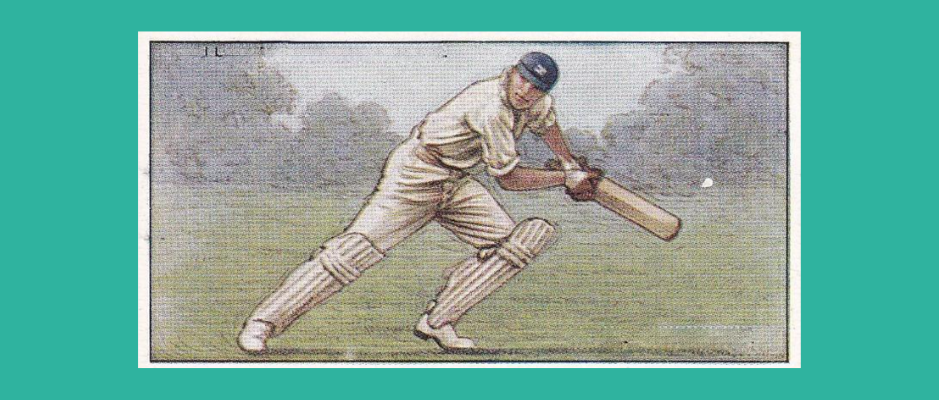
In the latest part of our series focusing on Sportsmen who fought at the Battle of the Somme, Peter Bloor tells the tale of Denis Hendren, who like his illustrious brother Patsy, played cricket for Middlesex before finding a different home in the north east and joining the war efforts as part of the Durham Pals.
Denis Hendren, “a promising all-round cricketer”
Like his younger and far better-known brother Patsy, Denis Hendren played county cricket for Middlesex, but in many fewer matches and with much less success, making 86 runs and taking two expensive wickets in eight matches between 1905 and 1907.
In 1907 Denis also played as the professional for Hendon in the Durham Senior League, and at the end of that season he left Middlesex and moved to County Durham to play as a professional in the League, first for Hendon again and subsequently for Durham City, Burnmoor and in 1914 for the powerful Sunderland club.
“He is possessed of the laudable ambition of qualifying for Durham County”
Denis had also moved north wishing to qualify by residence for Durham in the Minor Counties Championship and after the requisite two years he achieved his ambition in 1910, when he played in six matches, making his top score of 60 against Northumberland. In 1911 he made 103 and took 2 for 7 against Cheshire, played in a rain-affected draw against the touring Australians in 1912 and in July 1913 hit top form with 139 versus Cambridgeshire, 140 against Lincolnshire and 116 in the return with Cambridgeshire having made 74 against Lincolnshire and 75 against Cheshire in June.
1914: “How the Kaiser has spoilt sport”
Having played in all of the county’s matches in 1913, and having shown such form, Denis of course returned in 1914, making 81 against Glamorgan - who were not yet a first-class county - and 40 against Lincolnshire, when he also took 3 for 34. He made 38 against Glamorgan but otherwise poor scores in July and a duck against Northumberland on August 4th, the day on which war was declared. In Durham’s last peacetime match a week later he made 3 and took 3 for 21 against Cheshire, their remaining fixtures against Lincolnshire and M.C.C. being abandoned when the military took over the ground at Grantham and the M.C.C. cancelled theirs.
‘Denis Hendren has joined the Durham County Battalion’
The war had closed in on cricket, the war in which Denis would become one of the many casualties of the Battle of the Somme. Popular and successful at county and league level - he had taken 77 wickets when Durham City won the League in 1910 for example - Denis had established a connection, forged a bond may not be too strong a term, with the county through cricket, and not always in competitive matches. He had also played in charity matches for example, and in 1913 had taken an interest in the formation of a cricket club exclusively for Roman Catholics in Sunderland, the Hendrens being of Irish descent, hence his brother’s nickname Patsy.
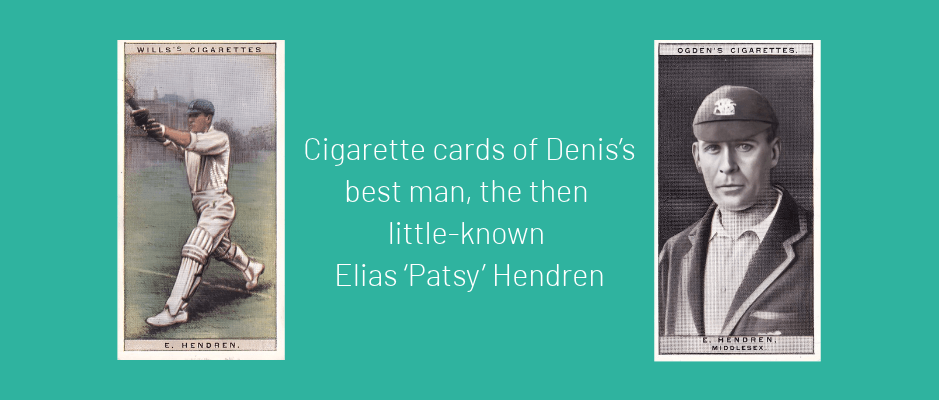
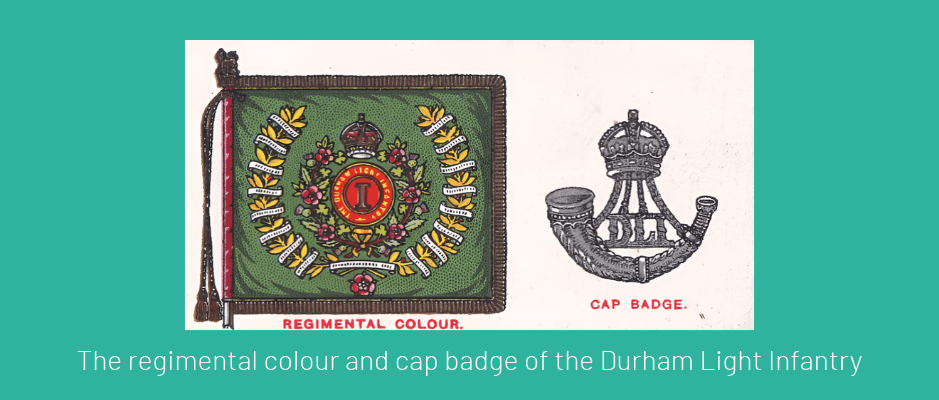
In January 1914 had he further strengthened that connection with the region by marrying Dorothy Hill from Newcastle, when Mr. E. Hendren, (Patsy, whose actual name was Elias), acted as best man. Barely twelve months later, in December 1914, he enlisted, not with the regiment of the county in which he had grown up and played cricket, the Middlesex, but with the 18th Battalion of what had become his local regiment, the Durham Light Infantry, the Durham Pals.
“Denis Hendren wounded”
In March 1916 Denis was with the Pals in Egypt, from where he wrote to the editor of the Sunderland Daily Echo asking the editor to “Give my respects to dear old Sunderland” and the people of the town to “remember the worthy sons of worthy fathers…all the local boys of D Company.” Some three months later the Pals were on the Somme where Denis was seriously wounded in the shoulder and foot although it is not clear precisely when, only that it was during “the great advance” or “the big push”, which suggests that it was sometime between July 1st and 4th when the 18th was in the front line.
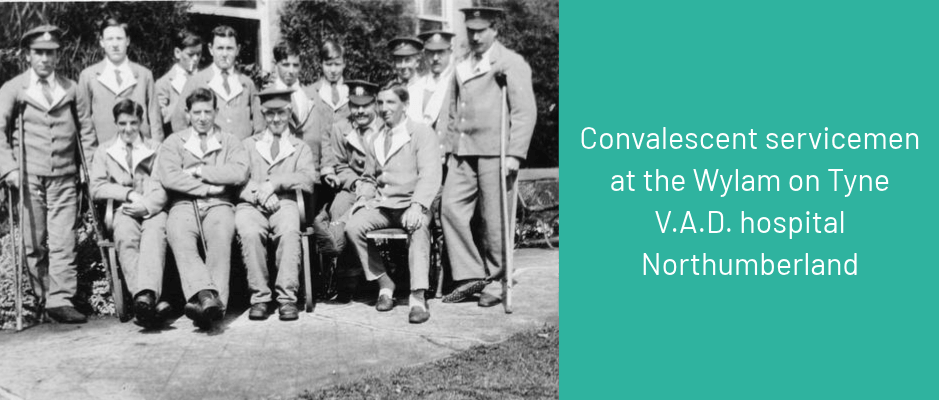
He was evacuated to hospital in Lincoln in July, posted as convalescent in September and moved to Sunderland in December, to Ashburne Hospital, which was staffed by volunteer nurses, members of the Voluntary Aid Detachment, the V.A.D. By July 1917 he had recovered sufficiently to have been discharged and able to arrange a charity cricket match, Durham and Northumberland versus an Army XI, for the benefit of the Durham Light Infantry Prisoners of War Fund and local charities, a match he asked the public of Sunderland and district to support in another letter to the Echo.
“Every credit is due to Corpl. D. Hendren, the Sunderland professional”
The public responded and well over a thousand of them watched Denis - now also fit enough to play - make 2 and take two Army wickets as the Army XI won easily. Individual performances and the result did not matter though, what was important was the financial success of a match that raised some £33 on the day, when the collection was made by the V.A.D. nurses from Ashburne Hospital, with perhaps a further £10 or more anticipated from the sale of the rationed teas that the nurses had also organised.
Using his cricketing and wartime contacts Denis had raised some £45 (around £4,400 today) for the benefit of his comrades in the D.L.I. and local causes. He had also been helped also by his letter to the Echo, one that he had signed “Denis Hendren, D.L.I, Seaham Harbour”, attaching his name to his now local regiment and to his place of residence in the county that sport had made his home.
References
Credits: the information and quotes in this article are taken from the Sunderland Daily Echo, the Newcastle Journal, the Durham County Advertiser, the Durham Chronicle and other local newspapers, and Cricket, A Weekly Record 1907-1917.
Denis’s Middlesex career from the Cricketarchive.co.uk website and the 18th DLI’s July whereabouts from the Battalion War Diary held at The National Archives.
Images: Patsy Hendren Wills 1928 (colour) and Ogdens 1926 (black and white), Durham Light Infantry colour and cap badge Players 1930, convalescent servicemen Imperial War Museum reference IWM Q108087. Banner image Wills 1928.
Comments: 0 (Add)
 RSS
Volunteers
We’re always on the lookout for volunteers to help run our clubs all across England, Scotland and Wales – find out more here.
Find a club
Want to know where your nearest Sporting Memories club is? View our Club Finder page here.
